

Turkey and Azerbaijan will be required to prove that the natural gas delivered to the European Union (EU) through entry points on Bulgaria’s border is not of Russian origin, following the EU’s introduction of a full and unrestricted ban on imports of Russian gas, according to a decision of the Council of the EU published in the Official Journal of the EU on Monday, BTA reports.
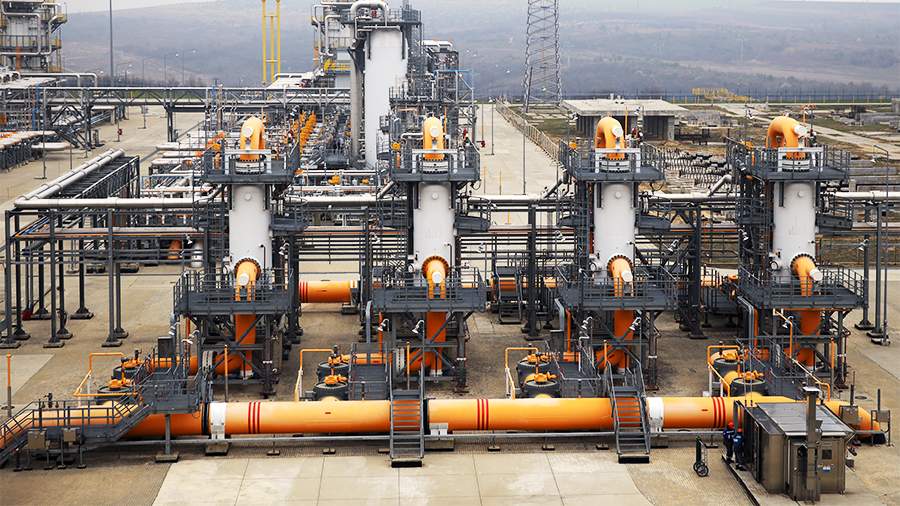
The Strandzha-1/Malkoclar entry point, located on the border between Turkey and Bulgaria, is identified as a critical interconnection point. Data from the European Network of Transmission System Operators for Gas (ENTSOG) show that in 2025, 1.9 billion cubic metres of natural gas were delivered to Bulgaria via this route.
Near this point is also the Strandzha-2/Malkoclar compressor station, which serves as the onshore continuation of the TurkStream offshore gas pipeline from Russia.
Regulation (EU) 2026/261 of the European Parliament and the Council states that interconnection point Strandzha-1 combines pipeline systems transporting not only gas from the Azerbaijan or Turkey, but also significant volumes of gas from Russia. As a result, "unambiguous evidence" will be required to demonstrate that the country of origin of the supplied gas is not Russia.
Under the regulation, gas imported into the EU through this point will be considered to be of Russian origin unless unambiguous evidence to the contrary is provided no later than seven working days before its entry into the EU customs territory. Authorities will be granted additional time to verify the submitted information.
A similar regime will apply to other compressor stations connecting the EU gas transmission network with pipelines through which significant volumes of Russian gas flow.
On January 26, the Council of the EU gave final approval to a complete ban on supplies of Russian liquefied natural gas (LNG) to the EU as of January 1, 2027, and on Russian pipeline gas as of September 30, 2027. The regulation enters into force on the date of its publication, February 2, 2026.