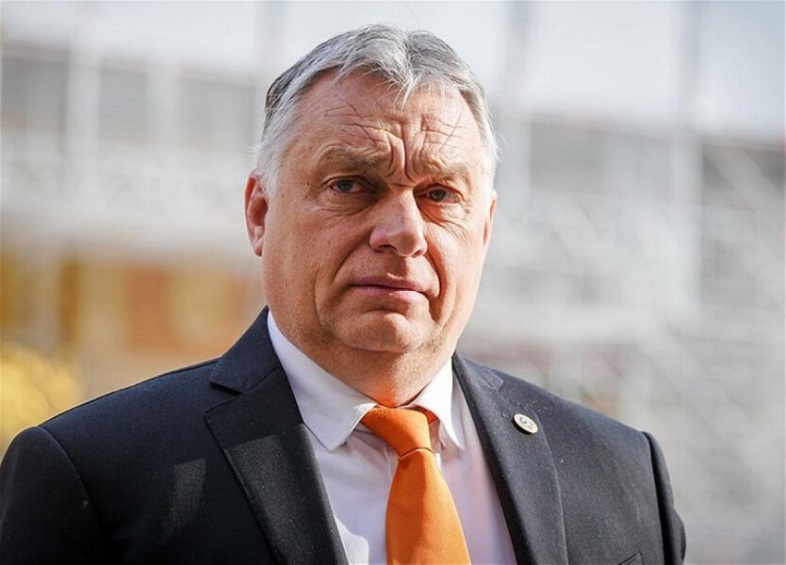
Hungarian Prime Minister Viktor Orbán is standing in the way of the EU's plan to seize €140 billion of sanctioned Russian assets and lend them to Ukraine. But the European Commission thinks it’s found a legal workaround to cut Hungary out of the decision-making process, Politico reprots.
Ordinarily, a measure as dramatic as Brussels' plan to seize Moscow's reserves would require unanimity among the 27 member countries — effectively granting a veto to Orbán, the EU leader closest to Russian President Vladimir Putin.
Given Orbán's long track record of seeking to obstruct sanctions against the Kremlin, EU legal experts are working on a scheme to ensure that the decision on the proposed “reparations loan” to Ukraine can be taken by a qualified majority instead.
Four people briefed on the plans told POLITICO the Commission is hoping to base its action on a set of European Council conclusions that all EU leaders, including Orbán, agreed to on Dec. 19 last year.
In that statement, the leaders declared: “Russia’s assets should remain immobilised until Russia ceases its war of aggression against Ukraine and compensates it for the damage caused by this war.” At the time, that statement had largely been understood to mean the assets themselves should remain frozen, mainly at Euroclear bank in Belgium, and not accessed by Russia, while interest could be used for the war effort.
The Commission’s new argument is that this statement provides sufficient cover to change the sanctions rules from unanimity to a qualified majority. For that to work, all or most of the other countries would have to agree.
“This would require a high-level political agreement by all or most Heads of State or Government,” the Commission said in a note to EU ambassadors meeting on Friday.
Winning that broader agreement will not be easy. There are other Russia-friendly nations in the potential mix, such as Slovakia.
Then there's the Belgium problem. The Belgian government has already pushed back amid concerns that the EU’s cash grab could expose Belgium and Euroclear, a financial institution that houses Russia’s frozen state assets, to legal retaliation from Moscow.
“Taking Putin’s money and leaving the risks with us. That’s not going to happen, let me be very clear about that,” said Prime Minister Bart De Wever in New York on the margins of the U.N. General Assembly. “If countries see that central bank money can disappear if European politicians see fit, they might decide to withdraw their reserves from the eurozone.”
Still De Wever conceded he was willing to discuss the matter, and Belgium is broadly supportive of measures against Putin, unlike Hungary and Slovakia.
The key offer of reassurance to the Belgians is likely to come in the form of other EU countries stepping in to replace the Euroclear assets sent to Kyiv with jointly underwritten IOUs.
EU leaders are meeting next week in Copenhagen, where discussions around the loan are planned. No formal decisions will be made — that is set for the summit at the end of October, after finance ministers have had a chance to dig into the proposal in Luxembourg on Oct. 10.