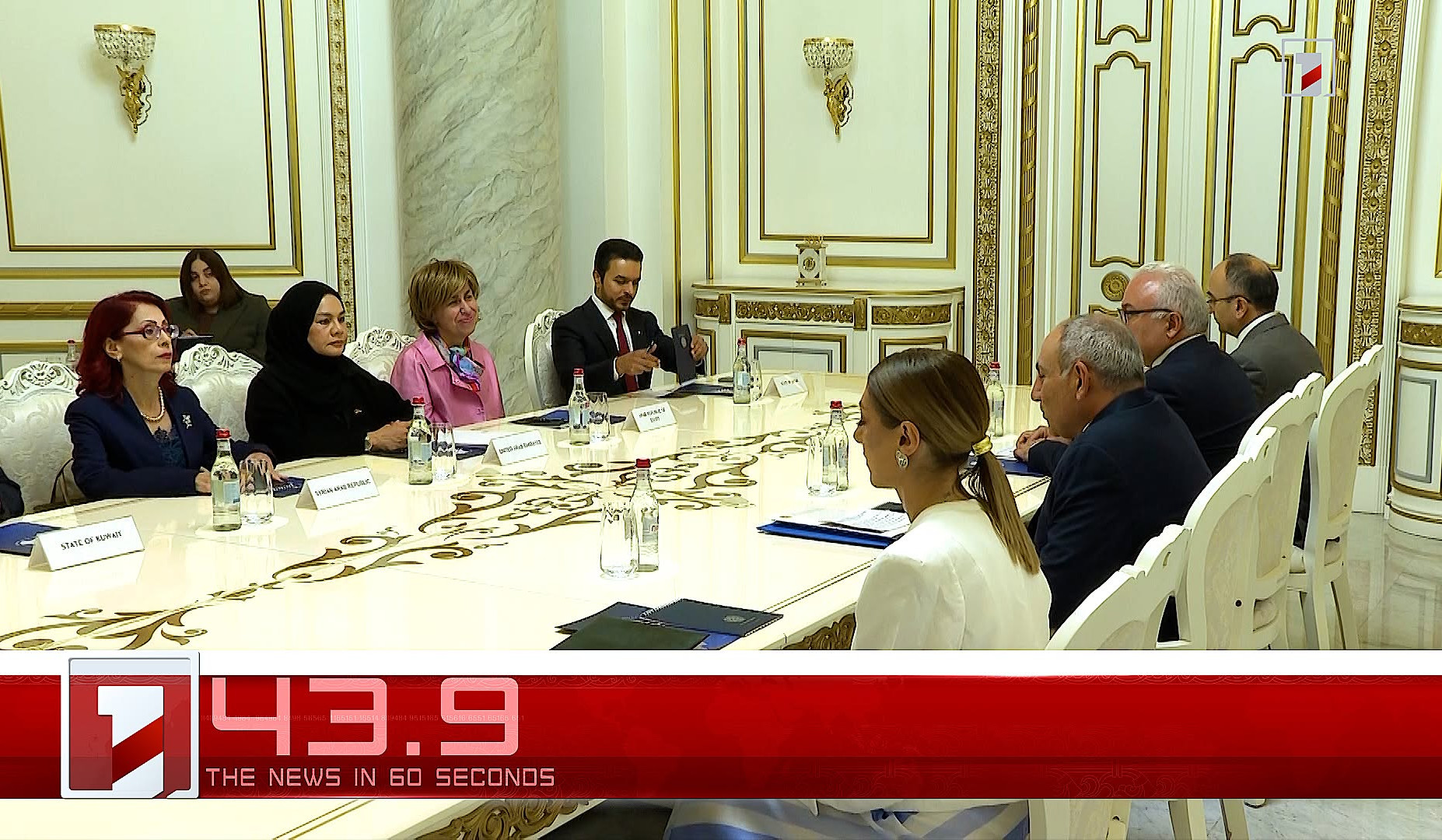
The TRIPP project has been launched; it was created on August 8 as a result of the Peace Summit in Washington, and the first action that we will take—and we are currently working on it, which must also show how the project will be implemented—is the creation of a written regulatory base. Prime Minister Nikol Pashinyan stated this during a conference on regional cooperation, presenting at which stage Armenia is in the implementation of TRIPP.
“I want to remind that the first stage of creating that base is the Washington Declaration, where the general framework is described. What will happen next? Next, a joint legal entity will be created by Armenia and the United States, which will be the TRIPP company or TRIPP partnership. The finalization of the name is in progress; it will be a jointly established Armenia–United States company, and there will be a board of directors that will manage the company.
Armenia and the United States will be represented on the board of directors, and naturally, the distribution within the board will also depend on the shares, which are currently under discussion.
But it is important to record that regarding issues of strategic significance, Armenia will have the right of decisive vote. This is a very important understanding and a very important statement,” he said.
According to Pashinyan, the next nuance is that the project will have several directions of development—railway, power transmission lines, pipelines that may include gas pipelines, oil pipelines, cables, as well as other means of transport communication.
“The biggest confusion is that many imagine the TRIPP project as a single layer, a project taking place or being implemented in one specific area. In reality, of course, nothing fundamentally excludes that, but practically it will not be possible to implement it.
For example, in the case of the railway, when we talk about routes, it can be stated with confidence where the railway will pass: it is our southern railway, which existed during the Soviet Union in the conditional Nrnadzor-Karchaghbyur sections, which is indicated in the ‘Crossroads of Peace’ project. Clearly, the railway will be there; it will be built and restored there.
Why clearly? Because it is practically impossible to have a railway elsewhere, or even if we imagine that it is practically possible, that railway would be tens of times more expensive.
But there is also another circumstance: those who have been on the ground know that, from a relief perspective, the area is quite limited even for the railway; it is impossible to implement all infrastructures and projects there. Therefore, of course, this is an issue for technical and economic feasibility studies.
For example, gas pipelines, oil pipelines, power transmission lines can be implemented via other routes, which will be more efficient and favorable from technical-economic and engineering perspectives. By ‘other places,’ I mean any other territory of the Republic of Armenia.
This is an important nuance that I wanted to emphasize,” he said.
Pashinyan also addressed the question of whether any institution of the Republic of Armenia, under the Constitution and legislation of the Republic of Armenia, will have any functional restrictions regarding those areas.
“I want to give a clear, unequivocal, unambiguous answer that leaves no room for misinterpretation—no,” he said.
Օn August 8, the Prime Minister of Armenia Nikol Pashinyan, the President of the United States, and the President of Azerbaijan Ilham Aliyev signed a declaration concerning the Trump Route for International Peace and Prosperity.
The Republic of Armenia will work with the United States of America and mutually agreed third parties to define the framework for implementing the 'Trump Route for International Peace and Prosperity' (TRIPP) communication program on the territory of the Republic of Armenia.