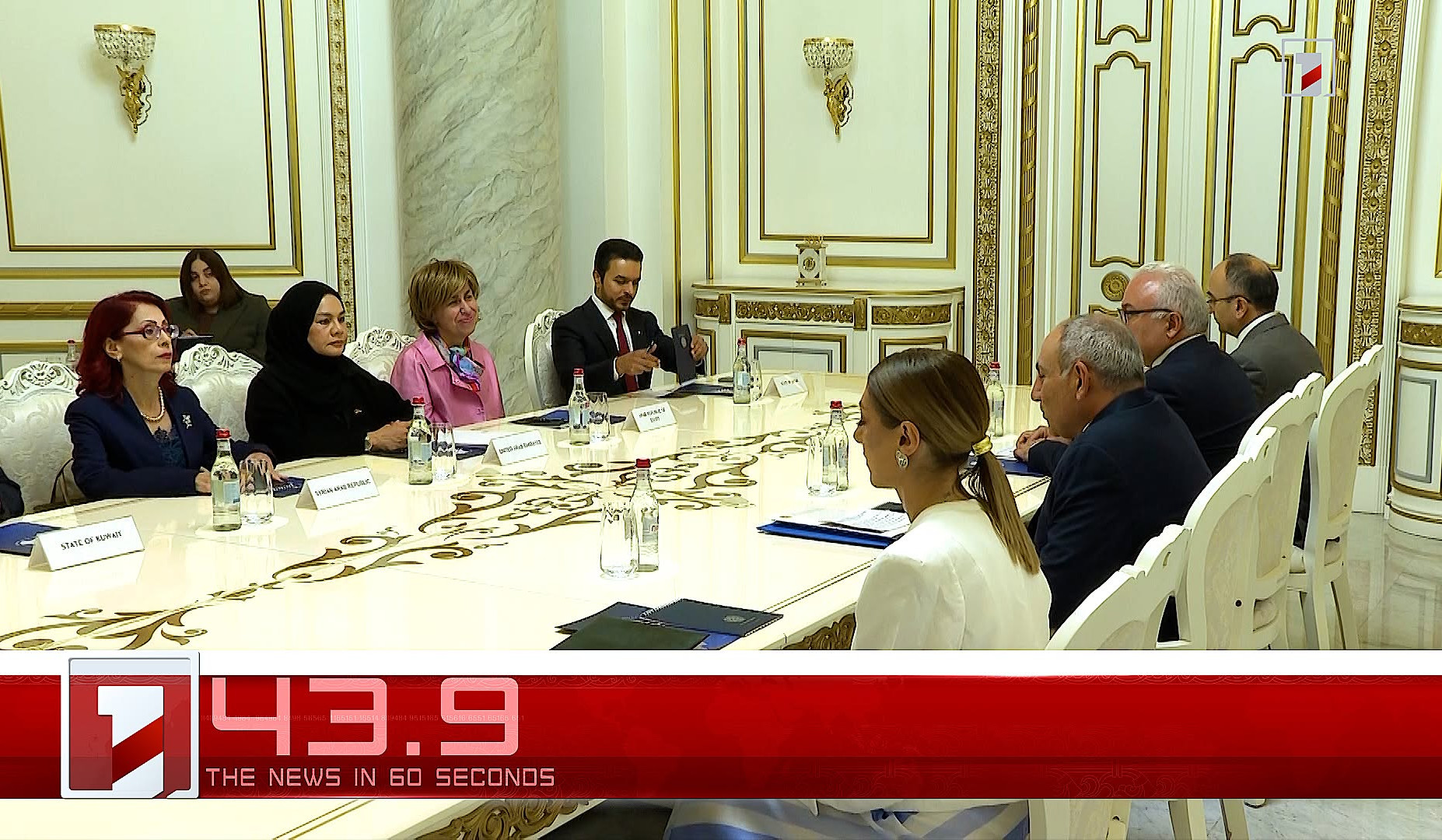
Armenian Foreign Minister Ararat Mirzoyan, at the invitation of EU partners, participated in a meeting within the framework of the EU Foreign Affairs Council format.
EU High Representative for Foreign Affairs and Security Policy and Vice-President of the European Commission, Kaja Kallas, European Commissioner for Enlargement, Marta Kos, and foreign ministers and representatives of EU member states participated in the breakfast-format meeting.
Significant achievements in the development of the Armenia-EU partnership were lauded, and discussions were held on upcoming actions, the Foreign Ministry said in a press release.
Ararat Mirzoyan praised the support and consensus formed in implementing the Armenia-EU strategic partnership agenda and various joint initiatives.
During the discussions, EU member states expressed their support for Armenia's democratic development, strengthening resilience, and countering hybrid threats.
In the context of regional developments, partners from EU member states expressed their support for the process of unblocking connectivity and efforts aimed at further consolidating peace between Armenia and Azerbaijan, the Foreign Ministry added.
“It is a pleasure to be back to Brussels, just two weeks after a very successful EU -Armenia Partnership Council, where we adopted the Armenia-EU Partnership Strategic Agenda, thus elevating our relations to a new level. Today, at the Foreign Affairs Council format, chaired by High Representative Kaja Kallas, together with the member states, we discussed all the major achievements of the Armenia-EU partnership—from the economy and stronger resilience to security-related issues, including hybrid threats and the assistance provided under the European Peace Facility.
We covered all the topics that are currently of great importance in the relations between Armenia and the European Union. We also assessed the progress in the visa liberalization process, a topic that is very important for the citizens of the Republic of Armenia and from the perspective of bringing Armenia closer to the European Union.
Of course, there is also the bigger picture—regional developments, the opening of communications between the countries of the South Caucasus, and the opportunities lying therein. We discussed and welcomed the potential involvement of the EU in infrastructure projects," he said.