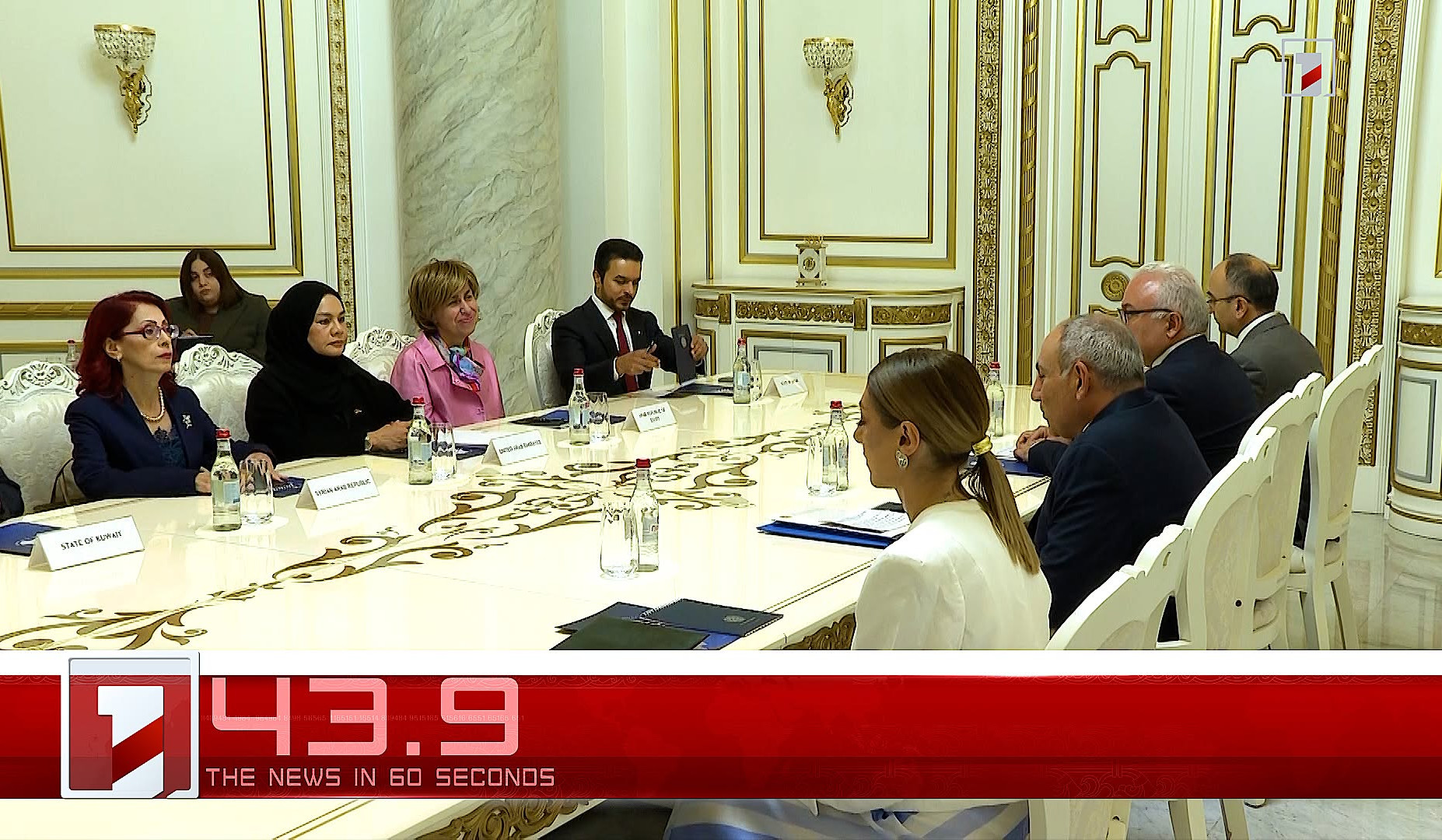
Security is the process of reducing one’s own vulnerabilities. It is clear that absolute invulnerability does not exist— even Achilles was vulnerable through his heel. Therefore, when dealing with the topic of security, our goal is to have as few Achilles' heels as possible, or to make them as protected as possible, Prime Minister Nikol Pashinyan said during his speech at the Comprehensive Security and Resilience International Conference.
In this context, the Prime Minister addressed the question of whether Armenia’s perception of reducing vulnerabilities has changed in recent years.
“Yes, it must be acknowledged that essential elements have changed in our perceptions regarding ensuring security and reducing our vulnerabilities. But first, I want to highlight our previous understanding of security. In the past, our perception was that the primary tools for reducing our external security vulnerabilities were military-political alliances and the army. However, our history came to prove that this formula did not work—neither in the first case, nor in the second,” he said.
According to Pashinyan, the first part failed on three occasions, the first of which was the CSTO's (Collective Security Treaty Organization) position.
“The CSTO states that Azerbaijan is as much a brotherly country for it as Armenia is, and that the CSTO recognizes the territorial integrity of Azerbaijan,” Pashinyan recalled, adding that the President of Russia made this statement on November 18 and December 17, 2020, declaring that from the perspective of international law, the territory of Nagorno-Karabakh is part of Azerbaijan and has always been considered as such.
“In other words, this primary security concept did not work in the context of the developments around Nagorno-Karabakh. If we had been attentive, we could have predicted from the beginning that it was not going to work,” he said.
According to Pashinyan, the second case was in May 2021, and the third in September 2022, when Armenia appealed to the CSTO regarding the violation of its territorial integrity. The CSTO’s response was that the borders were not yet delimited, and it was a question of whether there had indeed been an incursion into Armenia’s territory.
“This is when it became inevitable that none of the existing formulas worked for us, and we were forced to directly face a simple question: Does the CSTO recognize the territorial integrity of the Republic of Armenia?
But we hadn’t even had the chance to answer this question or to seek the answer when, unexpectedly and seemingly incredibly, another question arose—do we ourselves recognize our own territorial integrity?” said Pashinyan, adding that this led to the Prague discussions, during which the Armenian side proposed to rely on the Alma-Ata Declaration, and it was decided that Armenia and Azerbaijan were ready to recognize each other's territorial integrity on that basis.
Pashinyan considers this a turning point that significantly changed Armenia’s strategy.
“This was our first attempt to turn legitimacy into a tool of security, and from that moment, that tool began to work,” he said, emphasizing that they have now come to understand that legitimacy must be one of the pillars of Armenia’s security.