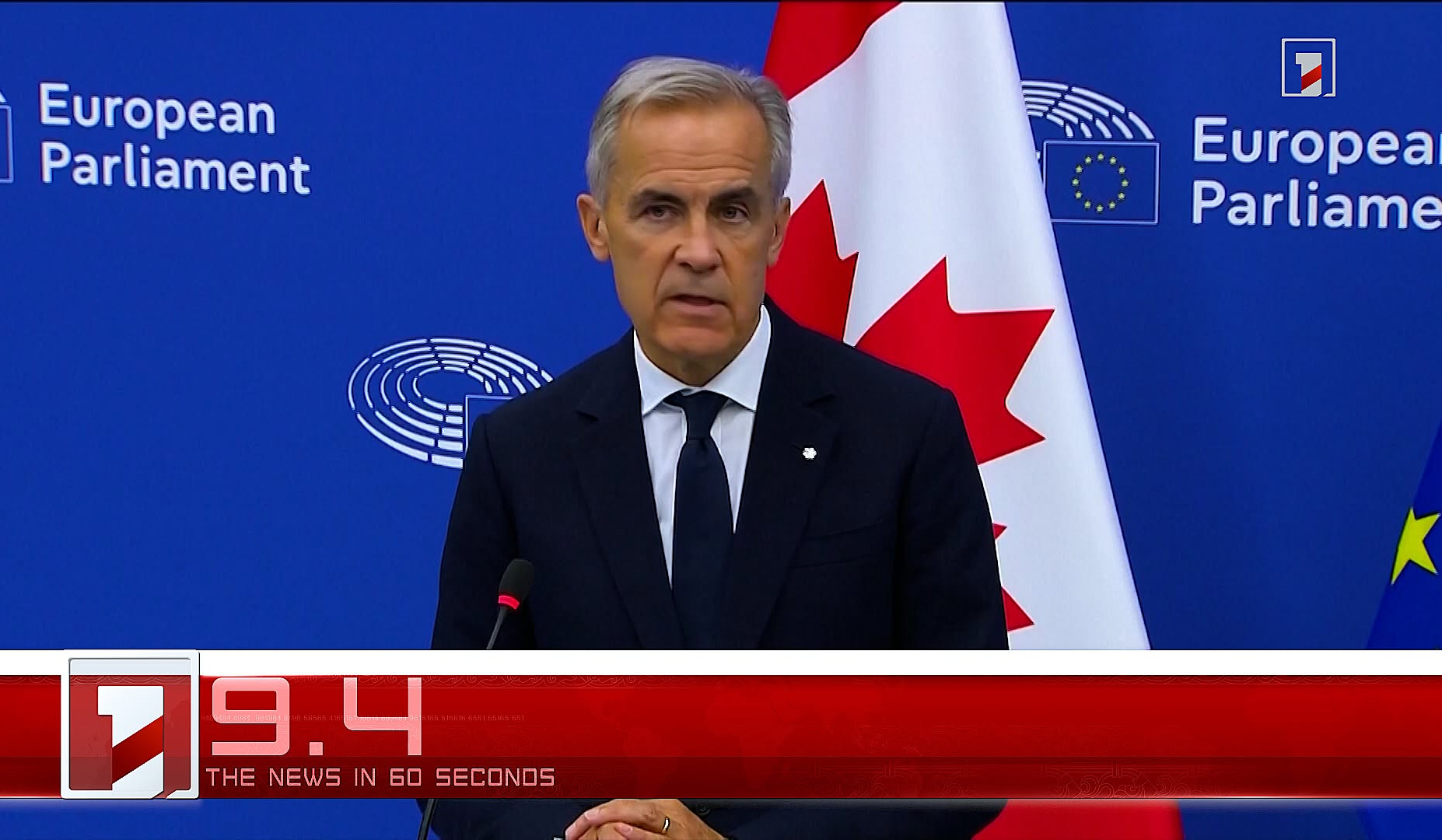
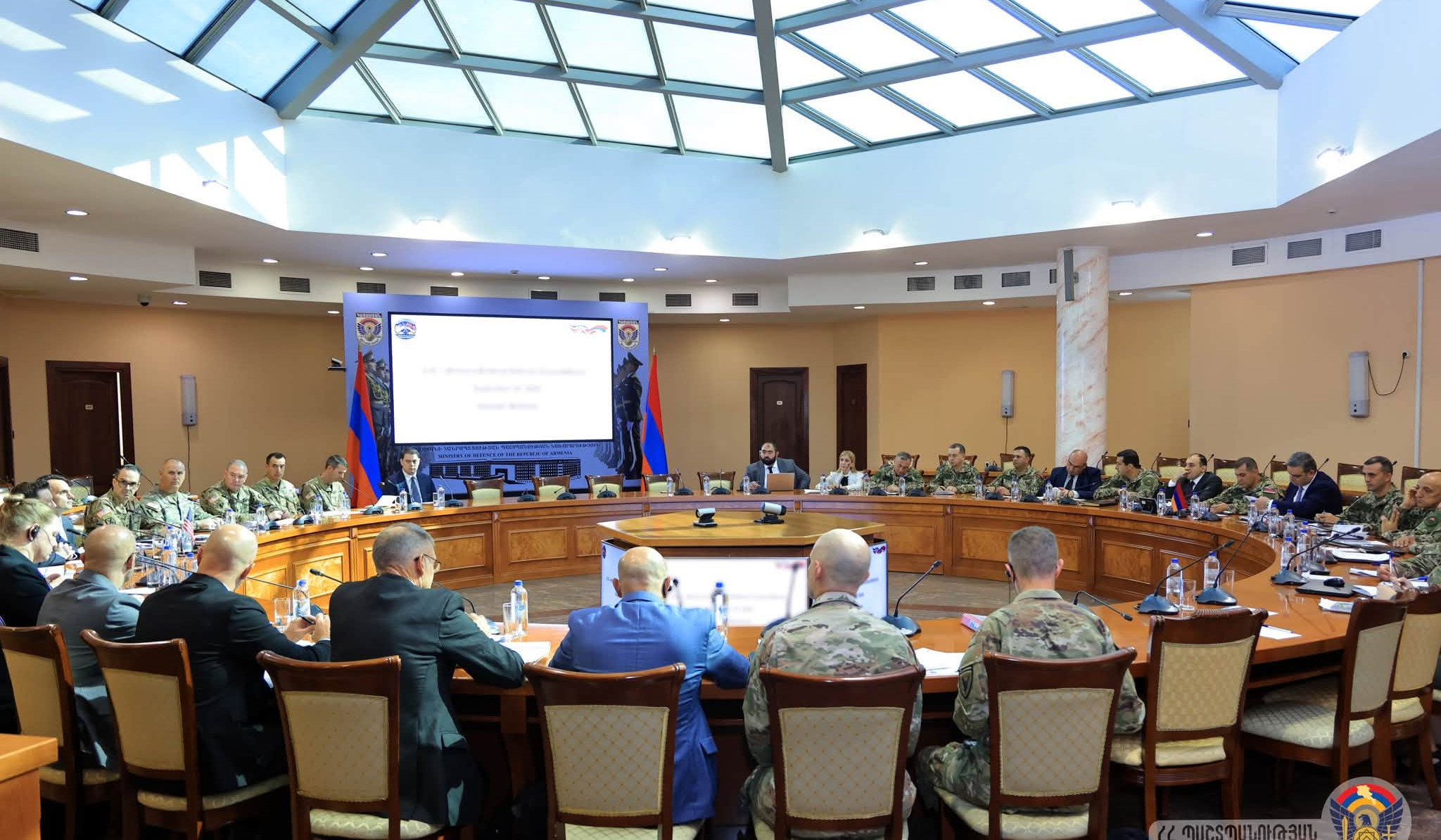
Prime Minister Nikol Pashinyan gave an interview to Petros Ghazaryan today. Below is the full text of the interview.
Petros Ghazaryan - Good evening, dear TV viewers, a few days are left until the first anniversary of the signing of the November 9 declaration. A year has passed, and today we will try to sum up that year with the Prime Minister of the Republic of Armenia Nikol Pashinyan.
Good evening, Mr. Prime Minister. Thank you for accepting our invitation. One year has passed since the declaration of the ceasefire on November 9, 2020. How does Armenia assess the implementation of the points of the declaration?
Prime Minister Nikol Pashinyan - First of all, we must state that the first point of the declaration refers to the cessation of fire and all military operations, and we can state by and large that, yes, the war stopped due to the signing of that declaration. And I would like to say that in this regard I highly appreciate the contribution of the Russian Federation, the President of the Russian Federation Vladimir Putin, to ending the war. I must also state that one of the very important points of the declaration has been fully implemented: there are Russian peacekeepers deployed in Nagorno-Karabakh and along the Lachin corridor, whose activities we highly appreciate, who are today key players in ensuring security in Nagorno-Karabakh, and this must be recorded.
On the other hand, I must note with regret that, nevertheless, the ceasefire regime is not fully observed in Nagorno-Karabakh as well, the peacekeepers have also recorded this, and I hope that a proper investigation into these cases will be carried out, and necessary measures will be taken. Let's recall the last outrageous cases when a civilian carrying out agricultural work was shot by an Azerbaijani sniper while driving a tractor. Yes, there was a peacekeeper sitting next to him in the tractor, and also the case when we had 5 soldiers wounded.
Unfortunately, I must note that since November 9, we have had many wounded and victims. We have had about 28 victims, in particular, I am speaking about the victims of the incident in the Khtsaberd-Hin Tagher section. There have also been incidents along the Armenian-Azerbaijani border, we have suffered casualties. This, of course, is a very disturbing fact, and I must say that we have also had cases of military operations, in particular, the incident in the Khtsaberd-Hin Tagher section, and the incident in the Sotk-Khoznavar section, which is a gross violation of the trilateral declaration.
I must emphasize that most of our 40 confirmed captives, 90%, have been captured following the November 9 declaration, and have not been released so far, contrary to Article 8 of the statement, which clearly states that prisoners of war, hostages, other detainees must be released. By the way, Azerbaijan's interpretation of who is a prisoner of war and who is not a prisoner of war is not appropriate at all, because the statement says prisoners of war, hostages, and other detainees, that is, this declaration, this point, in fact, refer to practically everyone held against their will. Moreover, I want to emphasize that there is no difference whether the capture took place before November 9 or after November 9.
The next disturbing fact. I talked about the ceasefire violations in Nagorno-Karabakh, I must state that there are also regular ceasefire violations on the Armenian-Azerbaijani border, which is also a gross violation of the provisions of the trilateral declaration. I must also state that despite the November 9 declaration, the right of the Armenian population of Shushi and Hadrut regions to return to their home place has failed to be secured so far.
The next issue that I must emphasize in this context is the following. Again, contrary to the 9th point of the November 9 declaration, the regional communications have not been opened yet. Yes, a lot of work is being done in this direction, and I hope we will achieve concrete results in the near future.
All these, of course, raise some concerns, although, on the other hand, there is no doubt that the November 9 declaration and the deployment of peacekeepers in Nagorno-Karabakh are the fundamental achievements. But the violations of the ceasefire regime, the incidents of our soldiers killed in Artsakh after November 9, lead us to the concern that, nevertheless, Azerbaijan has adopted a policy of discrediting the activities of peacekeepers.
Petros Ghazaryan - Mr. Prime Minister, on the eve of November 9, the Russian Foreign Ministry issued a statement, which, for the first time, presents a clear position on the so-called "Zangezur Corridor". The main thesis is that if the roads are opened, then the countries should have the sovereign right to control those roads passing through their territories. Can we state that the topic concerning the corridor-linked developments is closed?
Prime Minister Nikol Pashinyan – That topic had been closed still since November 9, 2020, when the declaration was signed, and I have referred to this issue numerous times. On the other hand, I must say that I highly appreciate the publication of the position of the Russian Federation to this issue, because, by and large, the Russian Federation has never had a different position. It should be noted that the position of the Russian Federation has simply been made public, or rather not the position of only the Russian Federation, but also the position of Azerbaijan, because, in fact, it is clearly stated that the parties agreed on it in the trilateral working group.
And I would like to draw your attention to the recent statement made by Turkey, where, yes, they use the term "corridor", but they say that this "corridor" should be under the control of Armenia. In other words, we can actually state that regardless of the preferences of the wording, we are talking about the opening of regional communications, I must say that the Republic of Armenia is interested in the opening of regional communications, I have stated this publicly many times. Azerbaijan is also interested, Russia is also interested, the Islamic Republic of Iran is also interested, and Turkey is also interested. The task is to bring closer and homogenize the perceptions over formulas.
Petros Ghazaryan - 8 meetings have already taken place in the format of the Deputy Prime Ministers. Are there any tangible, visible tendencies or not?
Prime Minister Nikol Pashinyan - In fact, the trilateral working group has done an enormous job, I highly appreciate the work done. I must say that at first purely technical work was done, for example, what roads existed, what roads can exist?
I would like to refer to the declaration of November 9 or 10 - there are different versions, depending on the time zones, 9 or 10 - the content of the 9th point. The 9th point says, the first sentence, “All transport and economic communications of the regions should be opened”. After that, there is a reference to the fact that the Republic of Armenia guarantees the transport communication between Nakhichevan Autonomous Republic of Azerbaijan and Azerbaijan. After that, there is a reference to building new transport communications with the consent of the sides. What is this text about? This is about the that the existing transport communications must be opened, if later it turns out that the volume of cargo transportations is so large that we have to think about new communications, then we have to think about new communications.
By the way, it is very important to state - I have said it several times before - our perception is that, yes, Azerbaijan, we already mentioned it, should have the opportunity to communicate with Nakhichevan through the territory of Armenia, the sovereign territory of Armenia, and we do not deny it, we accept it and we are ready. And our perception is that the Republic of Armenia, in its turn, should have communication with the Russian Federation and the Islamic Republic of Iran through the territory of Azerbaijan.
By the way, we are talking also about the following: When we say that Azerbaijan will have communication with Nakhichevan, we say that it will also have communication with Turkey. In other words, it cannot be only about internal communications. We are also pursuing the topic of international communication so that we can reach speedy solutions there. This is the answer to the question of what the working group has done?
Petros Ghazaryan – Where has it reached?
Prime Minister Nikol Pashinyan - The working group has written, drawn, studied all possible routes: Ijevan-Kazakh section, Berd-Tovuz section, Angeghakot-Bichenek section, Horadiz-Yeraskh section, Horadiz-Meghri-Ordubad-Yeraskh section. And our perception is that the Yeraskh-Ordubad-Meghri-Horadiz railway should be built, the Republic of Armenia - in its territory, Azerbaijan - in its territory, and this is also about the roads. In other words, the working group has put on the table all possible routes, including those that have access to the Russian Federation and the Islamic Republic of Iran. And now we have to agree on those routes through discussions.
Petros Ghazaryan – That means that the technical part is solved, and now decisions are expected?
Prime Minister Nikol Pashinyan – In reality, the technical part is the most effort-consuming part, but not the most difficult. The most difficult part is what I already said, the issue of formulas, based on which formulas the communications should open and operate. By the way, as for the formulas, I can say the following. I think it is clearly mentioned in the trilateral statement of January 11 and also the Co-chair of the working group, Deputy Prime Minister of Russia Alexei Overchuk said recently that there should be customs, passport and phytosanitary control at the border checkpoints. These are nuances needing very gentle work and discussions.
Petros Ghazaryan – Mr. Prime Minister, can we say that this process continues normally, there are no obstacles yet at this stage?
Prime Minister Nikol Pashinyan – This process goes on, but with some difficulties. There are also technical issues and the working group has presented how to resolve separate technical issues. However, the rest remains in the realm of political decisions, which, of course, cannot be free of influence of the existing technical foundations.
Petros Ghazaryan – Particularly in the recent period, Azerbaijan speaks about that it has made a peace proposal to Armenia, and this is voiced by Aliyev from various international platforms. Turkey also stated that, look, Azerbaijan has offered peace to Armenia, and if Armenia agrees, they do not see any obstacle to establishing relations. They also emphasize, there is no answer from Armenia yet. First of all, Mr. Prime Minister, is there such a proposal, because the proposal must have some flesh and blood? Is there such an offer to the Republic of Armenia? And if you have an answer, please.
Prime Minister Nikol Pashinyan - First of all, I must say that making peace proposal is not the monopoly of Azerbaijan. We have offered peace ourselves, we have done it several times. And the statements that Armenia has not responded are very strange. Armenia responded to those statements, Armenia said that we are ready. We also stressed that the goal of the negotiation format within the framework of the OSCE Minsk Group Co-Chairs is aimed at reaching a peace treaty. And we have said that yes, we are ready for those discussions, we imagine that these discussions should take place based on the results of the work done in the framework of the OSCE Minsk Group Co-Chairs, in particular, with the inclusion of the settlement of the Nagorno-Karabakh conflict. We have clearly stated this position, we have said that we are ready. In general, we have adopted an agenda to open an era of peaceful development. We received the mandate to open that era from our people as a result of the extraordinary parliamentary elections. We have also recorded it in the Government Action Plan. We have also responded to the mediators, we have publicly responded that, yes, we are ready for peace talks.
Petros Ghazaryan – So we see the signing of that treaty in the sideline sof the Minsk Group?
Prime Minister Nikol Pashinyan – Not the signing, because the signing must take place between Armenia and Azerbaijan.
Petros Ghazaryan – The process?
Prime Minister Nikol Pashinyan – We see the negotiation process in the sidelines of the OSCE Minsk Group Co-chairs’ format.
Petros Ghazaryan - By the way, there was an announcement that the foreign ministers met within this format, then the Co-chairs announced that they plan a visit to the region, and so far there is no concrete action. Why?
Prime Minister Nikol Pashinyan - Yes, recently, last week or this week, a delegation from the United States arrived in Armenia, including the US Co-Chair of the OSCE Minsk Group Andrew Schofer. I asked why the visit has not taken place so far, and he said that they are working on organizing the visit. And I think, yes, time has passed, it could have already happened. I presume there are some obstacles from the Azerbaijani side.
Petros Ghazaryan – Much is talked about delimitation and demarcation. Mr. Prime Minister, the Russian Foreign Ministry said in a statement, they are ready to assist. Interestingly, both Azerbaijan and Armenia declare that they are ready for this process. First, are there any concrete agreements? And we, the Armenian society, are concerned that Azerbaijan is trying to de jure get Artsakh as part of it by that process. Because if we recognize their borders, Artsakh automatically becomes part of Azerbaijan.
Prime Minister Nikol Pashinyan - We have clearly stated that the process of demarcation and delimitation, the process of settlement of the Nagorno-Karabakh conflict, the process of opening regional communications are clearly separated from each other. This is our position and, in fact, this is what we have recorded.
As for the issue of demarcation and delimitation of borders, back in May, you may remember, I announced at the Government session that I am ready to sign the document proposed by the Russian Federation on demarcation and delimitation. And do you remember what an internal political uproar arose, then a document was published with closed lines, then, when those lines were already opened, it turned out that in general, the moment of signing that document was lost, it was missed. Because, yes, we are not only ready, but we consider the demarcation and delimitation of borders necessary. But, on the other hand, we say that it is very difficult to imagine the process of demarcation or delimitation of a border where ceasefire violations take place every day.
By the way, let’s consider this in the context of the answer to your first question, because we must state that ceasefire violations take place at the border every day. Now we can say that the average number of ceasefire violations is quite low, but we must state that they take place practically every day. You know, we have had maybe 5-6 days since November 9, when no ceasefire violations were reported. Can you imagine only 5-6 days in a year? The ceasefire is being violated on a daily basis in Artsakh, although in recent period we have had several days in Artsakh, in the previous week we had 1-2 days, when there were 0 cases of ceasefire violations.
But by and large, the ceasefire is being violated on the Armenian-Azerbaijani border every day. Therefore, it is very difficult to imagine the process of delimitation and demarcation of the border where shootings take place every day. We consider it important to ensure conditions for demarcation and delimitation. And we have recorded about the need to provide those conditions several times in the past, including in the Government's Action Plan. I want to emphasize that this need is also emphasized in the Government's Action Plan. And yes, we consider it important and necessary. But at the moment, in the conditions of daily violations of the ceasefire regime, it is very difficult, although we continue consultations in that direction. To your specific question, are there any concrete agreements, I have to answer that, unfortunately, no.
Petros Ghazaryan - And since the process can go on, do we have any idea of maps of which year we are talking about, do we have those maps or not?
Prime Minister Nikol Pashinyan – We should understand what we mean saying a map. Because our observations have shown that the maps are re-prints. Look, we say a map of 1985, map of 1980, 1975, 1973, those maps are mainly re-prints, because since they are paper-based documents, they get worn and from time to time were re-printed.
The legal grounds are important – on what legal grounds did the border demarcation and delimitation take place on the border between Soviet Armenia and Soviet Azerbaijan? In general, what is the legal basis for demarcating, defining the borders between Armenia and Azerbaijan? Because the legal basis is registered on the map, but I must emphasize that, yes, all those reprinted maps are not identical. Why? Because there was such a tradition during the Soviet Union and not only a tradition. For example, on the occasion of an anniversary of the Communist Party, the fraternal republics donated territories to each other. By the way, this was done at the local level, for example, a certain region donates some hectares of pasture from this or that place. Our preliminary study shows that this happened mainly on the principle of reciprocity. And now it is very important to understand those legal bases. And by saying a map we do not mean a drawing on paper. We mean its legal substantiation, because the map is meaningless without legal substantiation.
Petros Ghazaryan - But if we are talking about so-called administrative donations in the Soviet Union, what legal basis can be here?
Prime Minister Nikol Pashinyan - It is necessary to understand on what legal basis they took place, to what extent those legal bases relate to the topic. But, in general, we have come to the conclusion that all the maps, that is, the legal bases, are the legal bases that were agreed between Armenia and Azerbaijan in the 1920s and 1930s. That is, we have to finally go to them. We need maps - there is a practical issue here - that the arrangements mentioned in the text are reflected on the maps. This is the work that needs to be done.