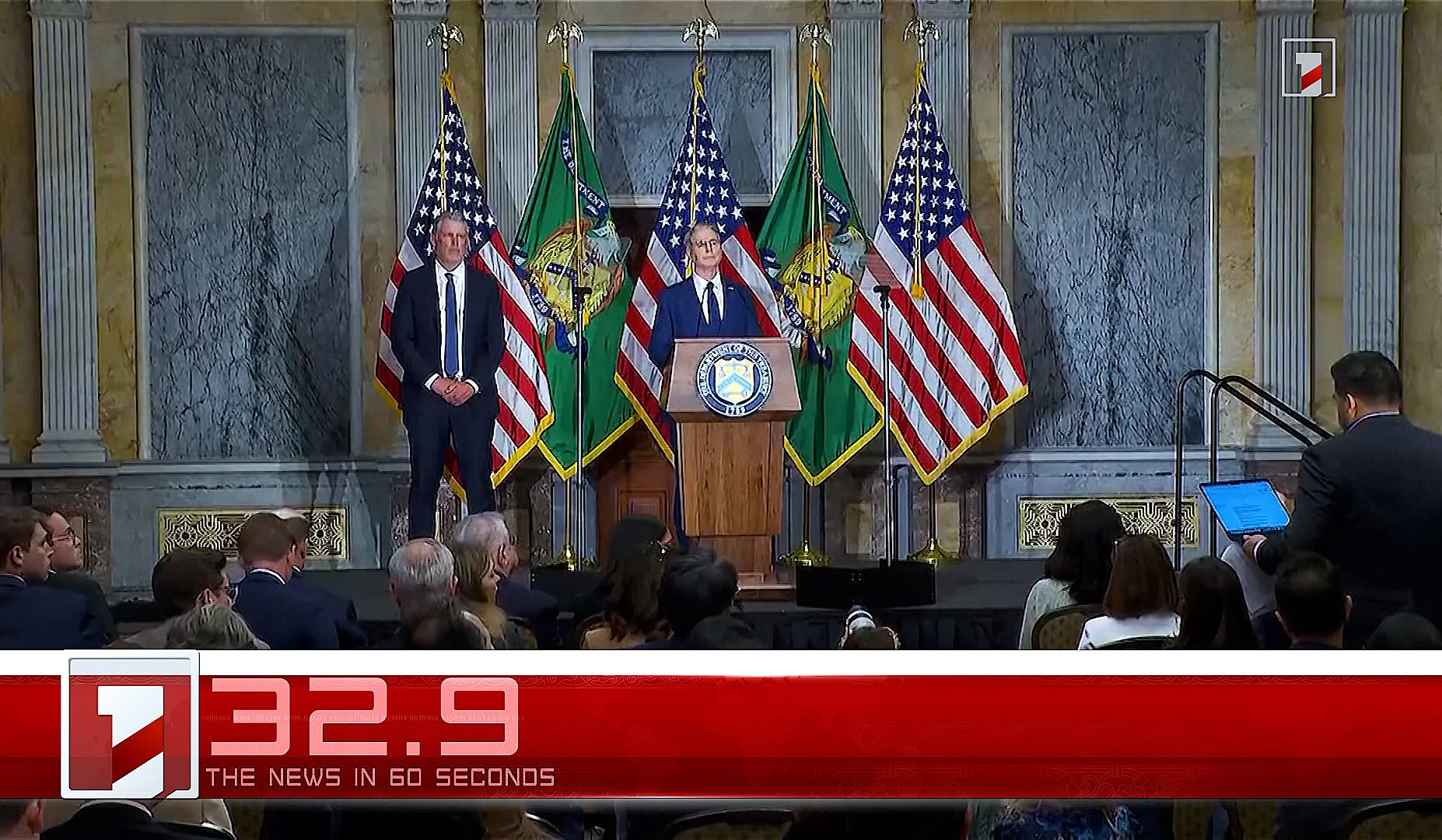
Armenia's Prime Minister Nikol Pashinyan has said that when the border delimitation process between Armenia and Azerbaijan continues on the ground, the issue of enclaves and exclaves will become a very ordinary working issue.
“Regarding the issues of enclaves and border delimitation, we have situations where we may lose access to roads, but Azerbaijan has similar situations as well,” he said at a press briefing.
“We constantly look at things from our own perspective, and it seems to us that they do not have the same problems. They have similar problems too. In general, let me tell you, in this regard, purely in terms of settlements, our situation, including in terms of the decisions we have made and infrastructure programs in recent years, is much better than Azerbaijan’s. My task is to take the tension out of this issue for both societies and governments, so that when we continue carrying out border delimitation on the ground, we can calmly discuss it with each other and with the people as well. Previously, there were no negotiations on this issue; there had been exchanges of views and border delimitation scenarios—how we should move forward, what we should do about the issue of enclaves. I am glad that we have been able to reduce the tension over this issue to zero. Now both Armenia and Azerbaijan will solve the problem that concerns everyone. This will become an ordinary working issue, which, I am convinced, will be resolved in the best possible way, because Azerbaijan has problems too, we have problems too, and we simply need to sit down and calmly discuss these problems with each other,” the Prime Minister said.
The Prime Minister recalled his previous statement that Armenia’s internationally recognized territory is 29,743 square kilometers, and that this figure does not include Azerbaijan’s three enclave territories, but does include Armenia’s exclave of Artsvashen.
“If we do not face up to this, it means we are saying that Armenia’s internationally recognized territory is not 29,743 square kilometers, but, for example, 29,755 square kilometers. This means indirectly declaring war on Azerbaijan. Why am I saying all this, while receiving your reproachful looks, criticism, and the opposition’s repeated claims of treason and surrendering land? Why am I doing this, am I a masochist? No, I am doing this not to manage the danger, but to neutralize it, because I see that there are internal and external forces thinking about how to collapse the established peace. I see that there are several points whose sensitivity is being exploited in an attempt to undermine peace and introduce escalation. I am taking the tension out of this issue so that it becomes impossible to build an escalation around it,” the Prime Minister said.
He said that there are currently no discussions with Azerbaijan on the issue of enclaves and exclaves, but there is a general border delimitation issue.
Pashinyan addressed criticism over why he calls the settlement of Tigranashen by the Azerbaijani name Karki.
“If we do not say Karki today, it means that we are renouncing the occupied territories of Jermuk, because a principle emerges according to which whatever someone has captured is already theirs. That is a conflict-generating principle. The issue of enclaves and exclaves was the last one around which it was possible to build a plan to collapse peace, but now that this tension has been removed, there is no way to undermine peace,” Pashinyan said.
According to him, there is one fundamental thing: it is the regulation on the joint activities of the border delimitation commissions of Armenia and Azerbaijan, which has been ratified in both countries and according to which there must be mutually acceptable concessions.