Prime Minister Nikol Pashinyan gave an interview to Al Arabiya TV channel. Below is the transcript of the interview.
Question - Mr. Pashinyan, welcome to Al Arabia. Thanks for sparing time for this interview. How dangerous is the situation in Karabakh today, especially considering that a few days ago you called for nationwide military and civilian mobilization?
Prime Minister Nikol Pashinyan - I would like to talk about the regional threats, since I think it is obvious how dangerous the situation is for Nagorno-Karabakh and Armenia. But I think it important for your audience to understand why the war is going on, what the context is.
First of all, let us state that this war would not have broken out without the intervention of Turkey, because there is flagrant evidence that Turkey has transported mercenaries from Syria to Azerbaijan to launch the offensive.
Second, this war was essentially a continuation of the joint Turkish-Azerbaijani military exercises that began in August and did not actually end before the start of the war. Turkish troops were still in Azerbaijan when the hostilities started. In fact, they attended the military operations.
It is important to understand why Turkey is interested in this flare-up; I think we should consider all this from the perspective of Turkey’s expansionist policy in the Mediterranean, Libya, Syria and Iraq. This is, in fact, a policy of rebuilding the Ottoman Empire; I believe that this policy must be strongly countered by the international community, otherwise it will pose the same threats to the Mediterranean countries, the Arab world, the South Caucasus, and Europe.
I have repeatedly told European televisions and media outlets that if this situation is not properly analyzed and assessed by European nations, they will have to see in Turkey at Vienna. Similarly, if the situation is not properly assessed by the international community, we will soon see other manifestations of Turkey’s imperialistic policy. Now we can see them in the South Caucasus, then we will see them in the north, east, south-east and south. So, this is a situation with Turkey’s aspiration to restore the Ottoman Empire at its heart.
Question: Mr. Pashinyan, you said why Turkey is interested in supporting Azerbaijan, but you also accused Baku of recruiting mercenaries through Turkey, just as you responded to the allegations of calling in Arabs with Armenian roots to help you. What is the difference between mercenaries and them?
Prime Minister Nikol Pashinyan - First of all, we do not have such a phenomenon. In other words, there is no such phenomenon, secondly, they are Armenian citizens, citizens of the Republic of Armenia who work or live in foreign countries. They came back to defend their homeland. There are also Karabakh citizens who live abroad and have returned to defend their homeland. But note that this is not as widespread as you depict it. I do not rule out such incidences, but I do rule out anything beyond this logic.
Question: Mr. Pashinyan, what is your vision for resolving this conflict?
Prime Minister Nikol Pashinyan – First of all, the hostilities should be stopped, since we can hardly imagine a diplomatic solution amid ongoing hostilities, after which substantive talks should be held, as provided in the Moscow statement of October 10, issued by the Foreign Ministers of Armenia, Russia and Azerbaijan.
Question: This time, what can persuade Armenia to sit down and negotiate?
Prime Minister Nikol Pashinyan - We have always been prepared for talks; we have always been ready for a compromise. The point is that when a compromise turns out to be acceptable for to Armenia, it suddenly becomes unacceptable for Azerbaijan. I can cite the example of the Kazan process held as early as in 2011. The most important issue for the Armenian side is the status of Nagorno-Karabakh, more specifically the acknowledgement of its independence, its right to self-determination. Nevertheless, during the so-called Kazan process the Armenian side agreed to the interim status of Karabakh, which was not a final status, but only an intermediate status.
In other words, we stepped back from our initial benchmark with the logic of reaching a compromise, but at the very last moment Azerbaijan refused to accept that compromise and came up with tougher conditions. This approach of theirs has prevented us from reaching a diplomatic solution until now.
Question: Mr. Pashinyan, President Donald Trump stated yesterday that the United States of America has good relations with Armenians, and they will definitely help them. What is your comment?
Prime Minister Nikol Pashinyan - I cannot comment on his statement right now, because the statement made by President Trump should be followed by detailed proposals and actions, so that I could comment on it. We know that the Armenians represent an influential force in the United States, and only time will tell what concrete action the United States will take to support this process.
Question: Mr. Pashinyan, in one of your tweets you said that Azerbaijan’s claims on Nagorno-Karabakh are not well-grounded as seen from the perspective of international law; you called for acknowledging and facing historical realities. What provisions of international law do you mean?
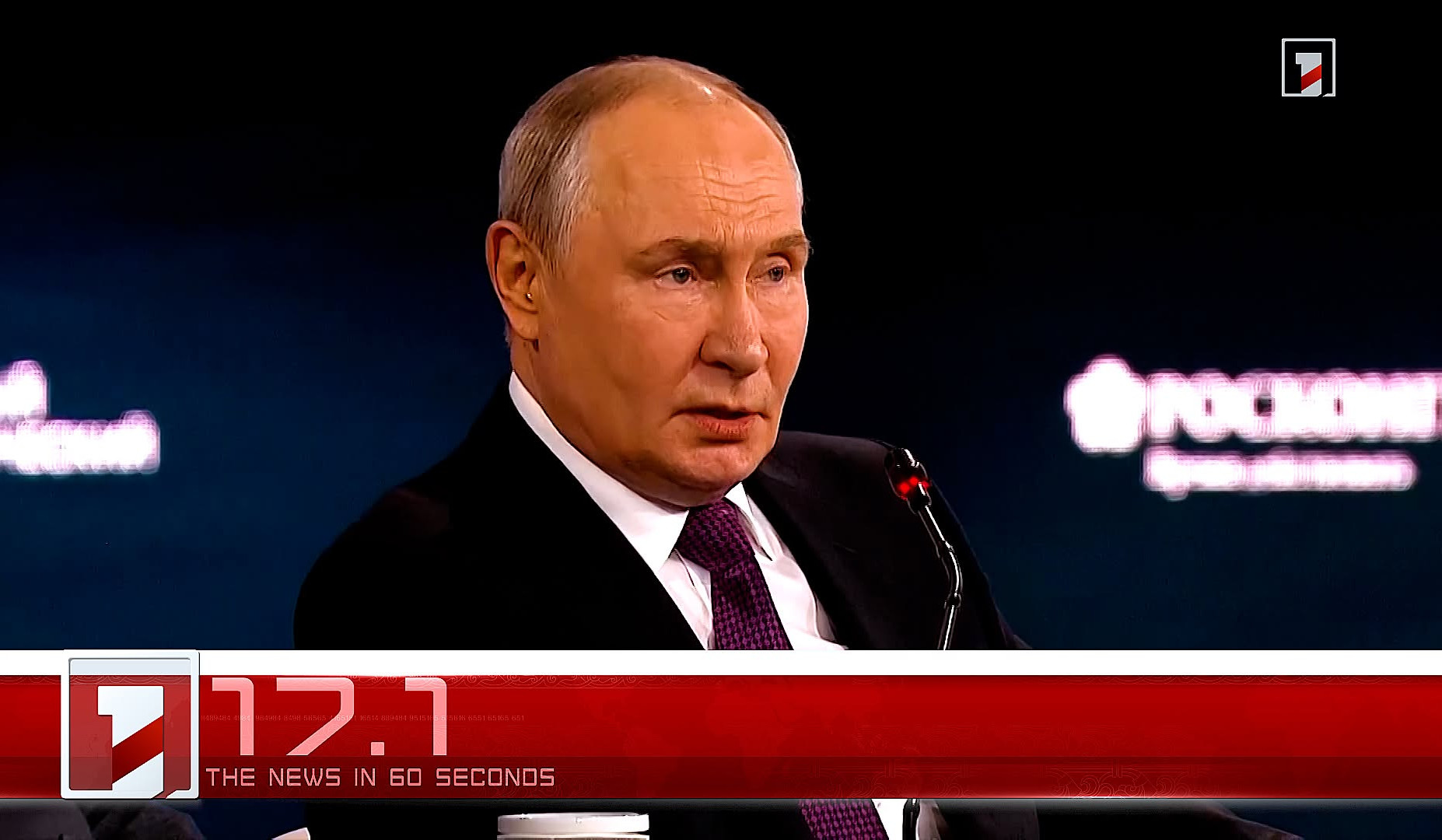
Prime Minister Nikol Pashinyan - It is crucial that we knew the truth about the Karabakh conflict. Something important happened the other day. Unfortunately, attempts are being made to present the Karabakh issue as a territorial dispute, where there are two sides with either side claiming that Karabakh is their land. But in reality, this conflict has nothing to do with such allegations. Speaking at the Valdai Club two days ago, Russian President Vladimir Putin declared that this is not a territorial dispute, but an ethnic conflict?
Unfortunately, as the conflict is a protracted one, the international community seems to have lost track of its origin, I mean the understanding of what this history of the Karabakh issue is. The Karabakh issue arose in 1988, when a democratization process began in the Soviet Union. At that time Nagorno-Karabakh has the status of an autonomous region with an 80% Armenian population. In a bid to take advantage of the ongoing the democratization process, the Armenians of the Nagorno-Karabakh Autonomous Region decided to restore their violated rights.
What were their violated rights? When the Soviet Union was being formed in the 1920s, Nagorno-Karabakh, which still has an Armenian population of more than 80 percent, was not included in Soviet Armenia, but in Soviet Azerbaijan due to Stalin’s arbitrary decision. The Armenians of Nagorno-Karabakh, the parliament of the Nagorno-Karabakh Autonomous Region decided to get the issue of their status resolved through absolutely peaceful political means, to which the Soviet Union and Soviet Azerbaijan responded with violence. Violence was first manifested in the killings of Armenians in Sumgait, Baku. This was the first stage of the conflict.
The next stage was the collapse of the Soviet Union. And according to the rules of the Soviet Union, if one of the Soviet republics gained independence, its autonomous unions, such as the Nagorno-Karabakh Autonomous Region, could decide on their status, because they were considered to be equal subjects in the Soviet Union.
When Azerbaijan declared its independence, Nagorno-Karabakh in turn declared its independence. And according to the same logic as Azerbaijan broke away from the Soviet Union, the Nagorno-Karabakh Autonomous Region became independent from the Soviet Union and Soviet Azerbaijan.
The international community’s failure to recognize Karabakh’s independence resulted in the conflict or in the Nagorno-Karabakh people’s struggle in this conflict. The Armenians of Nagorno-Karabakh are fighting for their right to be recognized by the international community. This is the whole story. But it is crucial to understand the reasons and the causal links behind their aspiration to independence.
The Armenians of Nagorno-Karabakh did not seek independence just out of a whim; they were facing an existential threat in Soviet Azerbaijan, which first manifested itself in a cultural genocide, in the violence that followed the 1988 peaceful struggle and in the full-scale military offensive launched in 1991. Even today we can see that the towns and villages are being shelled in Nagorno-Karabakh.
It is now obvious to everyone that the Armenians of Nagorno-Karabakh, who have always constituted more than 80% of the local population, cannot survive in Azerbaijan. The fact that terrorists and terrorist methods are being used against Nagorno-Karabakh comes to reaffirm the Nagorno-Karabakh’s right to independence, which is described in international law as “remedial secession.”
Question: Mr. Prime Minister, what is your attitude to the fact that Azerbaijan puts it as “liberation” when talking about Karabakh or Artsakh?
Prime Minister Nikol Pashinyan - That is what I am saying. That word must be translated: it means liberating Karabakh from the Armenians, which is a direct threat of genocide. And that is why we say that it once again proves that Karabakh under Azerbaijan’s control means Karabakh without Armenians, which is genocide. And this is why we believe that especially now the principle of “remedial secession” should be applied to Nagorno-Karabakh.
Question: Yesterday the President of Azerbaijan said that their army had established control over some border villages. What can you say about that?
Prime Minister Nikol Pashinyan - Military operations are taking place; I would say very heavy operations are taking place on the ground. The Azerbaijani army has made some progress, but the people of Nagorno-Karabakh and the Defense Army are fighting heroically for their independence and safety. They will fight to the last.
Question: Mr. Prime Minister, how would you comment on the allegations that the current confrontation has nothing to do with a traditional territorial dispute, and that it has a gas component? What can you say about that?
Prime Minister Nikol Pashinyan - Gas definitely has a non-primary meaning here. An attempt is being made to give this conflict a gas, a religious, or a territorial context. Why is all this being done? To divert attention from the essence of the conflict. This is very important. You see, in answering your questions, I just tried to point out that we should pay attention to the essence of the conflict, since an accurate diagnosis is needed before treating the problem.
Why do they say territorial dispute? Why is it called a gas conflict? Why is it sometimes called a religious conflict? This is being done to divert the international community’s attention. As long as the problem has not been diagnosed and perceived correctly, it will not be solved. Therefore, I think it is being done by those forces not interested in settling the issue. They need manipulations to serve their own interest in that context. What has gas to do with all this?
Question: After all, how long will this conflict continue, and how should it end?
Prime Minister Nikol Pashinyan - You know, the OSCE Minsk Group Co-Chairs are doing everything to stop violence. Yet again, we must understand the essence of the conflict, because while the representatives of Azerbaijan and Armenia discussed the possibility of a ceasefire with the representatives of the Minsk Group Co-Chairs, Turkey insisted that Azerbaijan should not cease hostilities. And it was more than once confirmed that Turkey is fueling the conflict and getting terrorists engaged in the region.
No coincidence that many countries have already come to believe that violence cannot be stopped without taking terrorists and mercenaries off the region, restricting Turkey’s involvement in the conflict. Otherwise, we will not have the desired outcome.
Question - Observers are also asking whether Armenia has strong evidence of the transfer of military equipment from Turkey to Baku.
Prime Minister Nikol Pashinyan - I would like to talk about two facts so as not to go into too much detail. First, the European Court of Human Rights has ruled that Turkey’s involvement in this process has been proven at the request of Armenia. The ECHR has applied a means of securing the suit. Second, the presence of mercenaries was confirmed by the representatives of the Islamic Republic of Iran, the Russian Federation, France and a number of other countries, including the United States. There is specific evidence published on the web. Armenia, in turn, has a package of evidence that we have reached out to our international partners.
Question: Let me ask you one last question. In the end, what would you like to say to Azeris and Armenians?
Prime Minister Nikol Pashinyan – I would like to conclude with what I said after becoming Prime Minister. We must find a solution acceptable to the people of Azerbaijan, to the people of Armenia, and to the people of Karabakh.
Al Arabiya: Thank you very much, Mr. Prime Minister. Thanks for taking the time.
Prime Minister Nikol Pashinyan - Thank you, too.