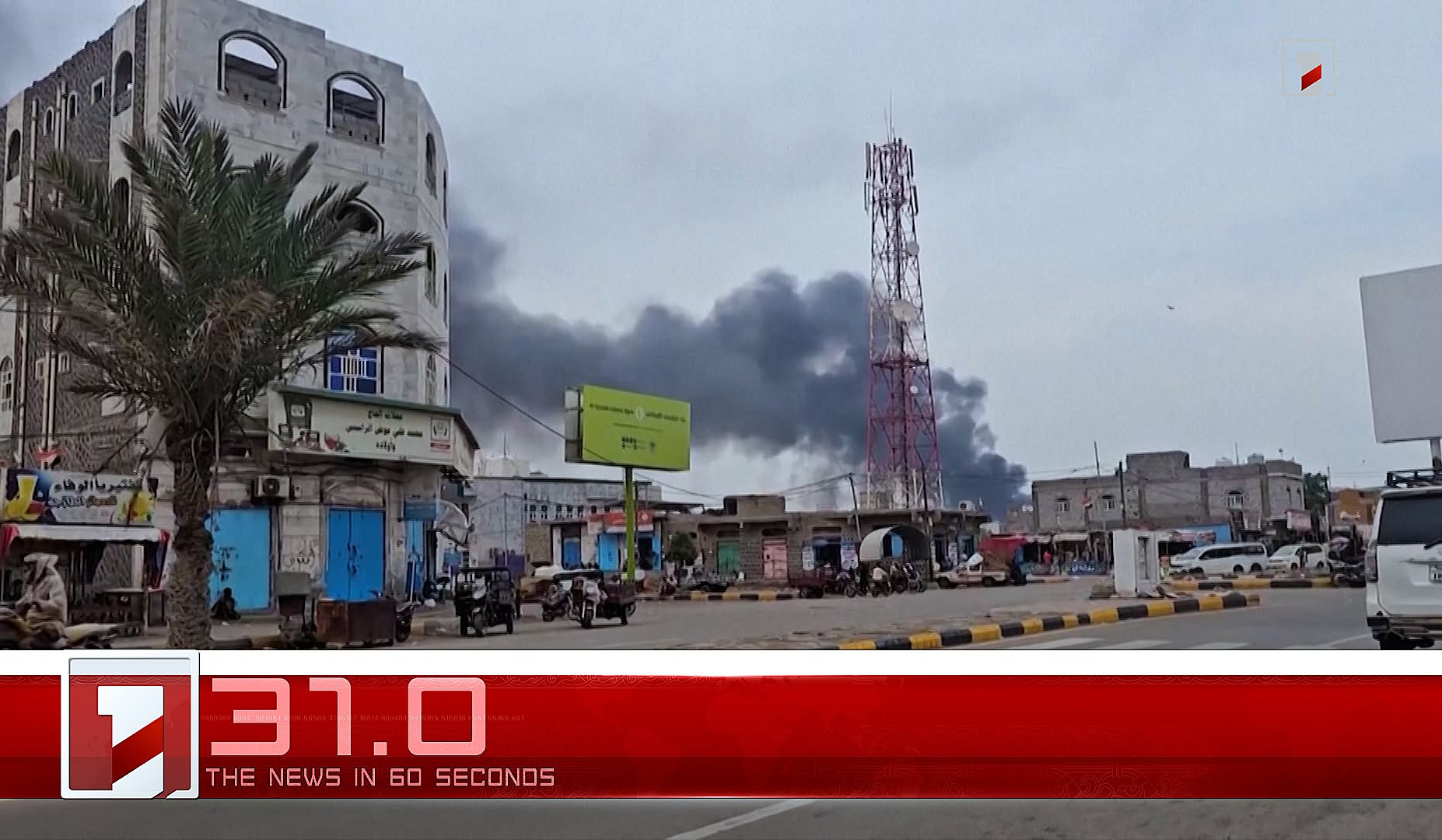
In November 2020, a 44-day war between Armenia and Azerbaijan ended with an armistice and confirmed Baku’s capture of territory in and around Nagorno-Karabakh, an ethnic Armenian enclave that is internationally recognized as part of Azerbaijan but had enjoyed de facto autonomy since an earlier cease-fire in 1994. The local population has consequently lived in isolation for the past two and a half years, hemmed in on all sides by a deeply hostile and authoritarian Azerbaijani state,
Freedom House reports.
Even as the president of Azerbaijan and the freely elected prime minister of Armenia engage in negotiations on the terms of a broader settlement, Azerbaijani forces have tightened the cordon around Nagorno-Karabakh over the last several months, pushing residents toward a humanitarian breaking point and increasing the need for urgent assistance from the world’s democracies.
The Azerbaijani government has no tolerance for independent civil society groups and violently disperses unauthorized protests. Last December, however, a group of “eco-activists” linked to the regime began to block traffic on the Lachin corridor, a narrow strip of road that served as the only land connection between Armenia and the residents of Nagorno-Karabakh under the terms of the 2020 cease-fire. On April 23 of this year, on the eve of the Armenian Genocide Remembrance Day, the Azerbaijani authorities began installing official checkpoints on the corridor, effectively preventing entry to the enclave. The move has drawn criticism from the US Department of State, the European Union, and most of the democratic world. Shortly after Baku implemented this official blockade, the “eco-activists” disbanded.
The Lachin corridor is essential for the survival of the ethnic Armenian population of Nagorno-Karabakh. Its obstruction for the last several months has led to a lack of access to vital goods and services. At the same time, the flow of natural gas to Nagorno-Karabakh from a pipeline that passes through Azerbaijani-controlled territory has been completely cut off. Baku has similarly severed the region’s connection to Armenia’s electrical grid, leading to daily power cuts. These energy problems have disrupted hospital operations, as have shortages of medicine, medical supplies, and hygiene products.
Children, the elderly, and people with disabilities have been particularly affected by these deprivations. Around 30,000 children have been unable to attend kindergartens and other educational institutions. Frequent electricity and gas shutdowns during the freezing temperatures of winter resulted in the closure of dozens of schools and colleges.
Since the end of the 2020 war, Russian peacekeepers have been deployed along the new line of contact and the Lachin corridor. But Moscow’s war of aggression against Ukraine since February 2022 has reduced its ability to influence events in the South Caucasus. Despite its military presence and declared responsibility to ensure the protection of the rights and security of the ethnic Armenians of Nagorno-Karabakh, the Russian government has scarcely reacted to Baku’s repeated violations of the cease-fire statement.
As a result, the Armenian government and public have roundly criticized the Russian peacekeeping contingent. Armenian prime minister Nikol Pashinyan—who came to power as the leader of a nonviolent protest movement in the Velvet Revolution of 2018 and later won two democratic elections—has repeatedly accused the peacekeepers of failing to fulfill their obligations and ignoring Baku’s efforts to make conditions in Nagorno-Karabakh unbearable. He has suggested initiating a session at the UN Security Council to authorize an international peacekeeping mission for the region.
The Velvet Revolution in Armenia was seen as a victory for democracy, blocking the incumbent leader’s attempt to extend his decade-long rule. However, it also raised concerns in the Kremlin that Armenia, traditionally a Russian ally, could undergo a geopolitical shift toward the West. Moscow’s inability or refusal to protect the interests of Armenians—both in Armenia and in Nagorno-Karabakh—has only deepened the Russian rift with Yerevan, creating a key moment of opportunity for leading democracies to step in, respond to the threats emanating from the Azerbaijani regime, and set the conditions for further democratic progress in the South Caucasus.
Democracies worldwide have already expressed their concerns regarding the human rights violations resulting from Baku’s actions, and international institutions have increasingly weighed in. The International Court of Justice has instructed Azerbaijan to “take all necessary measures” to ensure unhindered movement of people, vehicles, and cargo along the Lachin corridor in both directions. Yet the Azerbaijani government has not only maintained its blockade, but also formalized it.
The regime of Azerbaijani president Ilham Aliyev is notorious for disregarding international accountability mechanisms. Shortly after the cease-fire statement was signed in November 2020, Azerbaijani forces seized two additional villages, and later captured the village of Parukh (Farukh) in Nagorno-Karabakh. Last September, the Azerbaijani military launched an attack on positions inside Armenia itself—well beyond Azerbaijan’s internationally recognized borders.
Nonbinding policy recommendations, such as the opinions of the Council of Europe’s Venice Commission, have carried little weight with the Aliyev government. Even binding decisions from international tribunals are ineffective: Azerbaijan routinely fails to execute judgments of the European Court of Human Rights, and nearly 40 percent of these unimplemented cases relate to the conflict. In this context, it is clear that human rights abuses in Nagorno-Karabakh can only be addressed through much more active engagement and enforcement efforts by democratic powers.
The immediate crisis in Nagorno-Karabakh is a humanitarian one, but the fundamental dispute is between a community of people seeking freedom and self-government on their home soil and an authoritarian aggressor that would rather kill or expel them than recognize their fundamental rights. As many of the world’s democracies rally together to oppose Moscow’s invasion of Ukraine, they should not forget that other, similar injustices are unfolding elsewhere, threatening the international prohibition against wars of conquest that Ukrainians are fighting so hard to uphold.
In the short term, democracies should leverage international institutions, such as the Organization for Security and Cooperation in Europe or the UN Security Council, to help enforce orders like that of the International Court of Justice, ensuring that the blockade of Nagorno-Karabakh is lifted in practice. Meaningful enforcement actions could also deter Baku from using military escalations along the border with Armenia to win territorial concessions in its talks with Yerevan, which are being facilitated by Washington and Brussels. Meanwhile, democracies should provide direct humanitarian assistance to the populations affected by the conflict to alleviate their suffering.
Beyond such action by governments, civil society has a crucial role to play in raising awareness about the human rights situation resulting from the conflict. Local civic groups should monitor and document any human rights violations, and contribute to peacebuilding and reconciliation by fostering dialogue between ethnic and national communities. They can also establish international networks and alliances to amplify their voices and advocate for democratic values across the region.